Bird of Paradise
Strelitzia reginae
Known for its exotic, crane-like orange and midnight-blue flowers, the Bird of Paradise is a striking tropical plant native to South Africa. It is extremely hardy and thrives in coastal and temperate Australian gardens. It can also be grown indoors in highly sunlit positions, bringing a bold architectural foliage texture to modern designs.
Native Origin & Climate
Coastal South Africa. Highly suited to Australian coastal conditions, from Sydney all the way to Tropical North Queensland.
Expert Pruning Tip
Cut old, tattered leaves and spent flower stalks off near the base of the stem using clean, sharp secateurs to encourage fresh, neat growth.
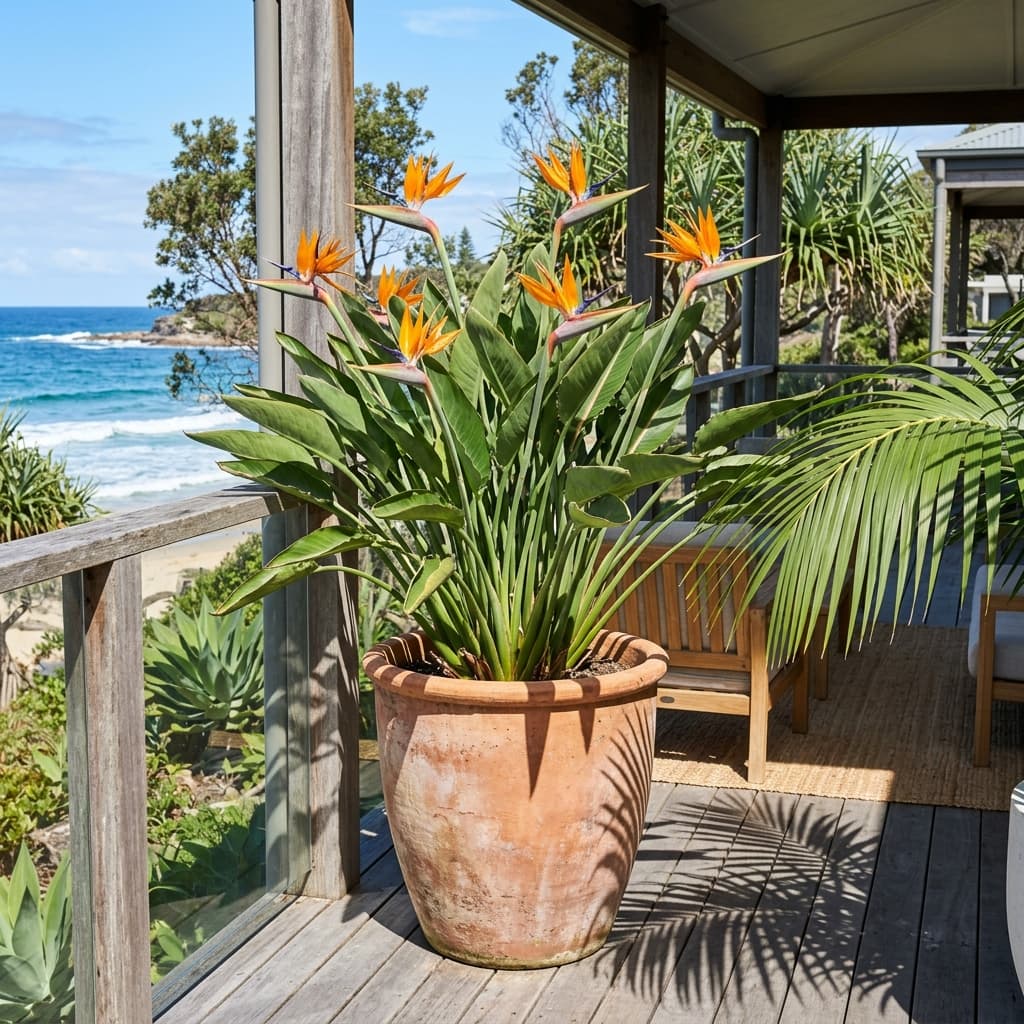
In-Situ Environment
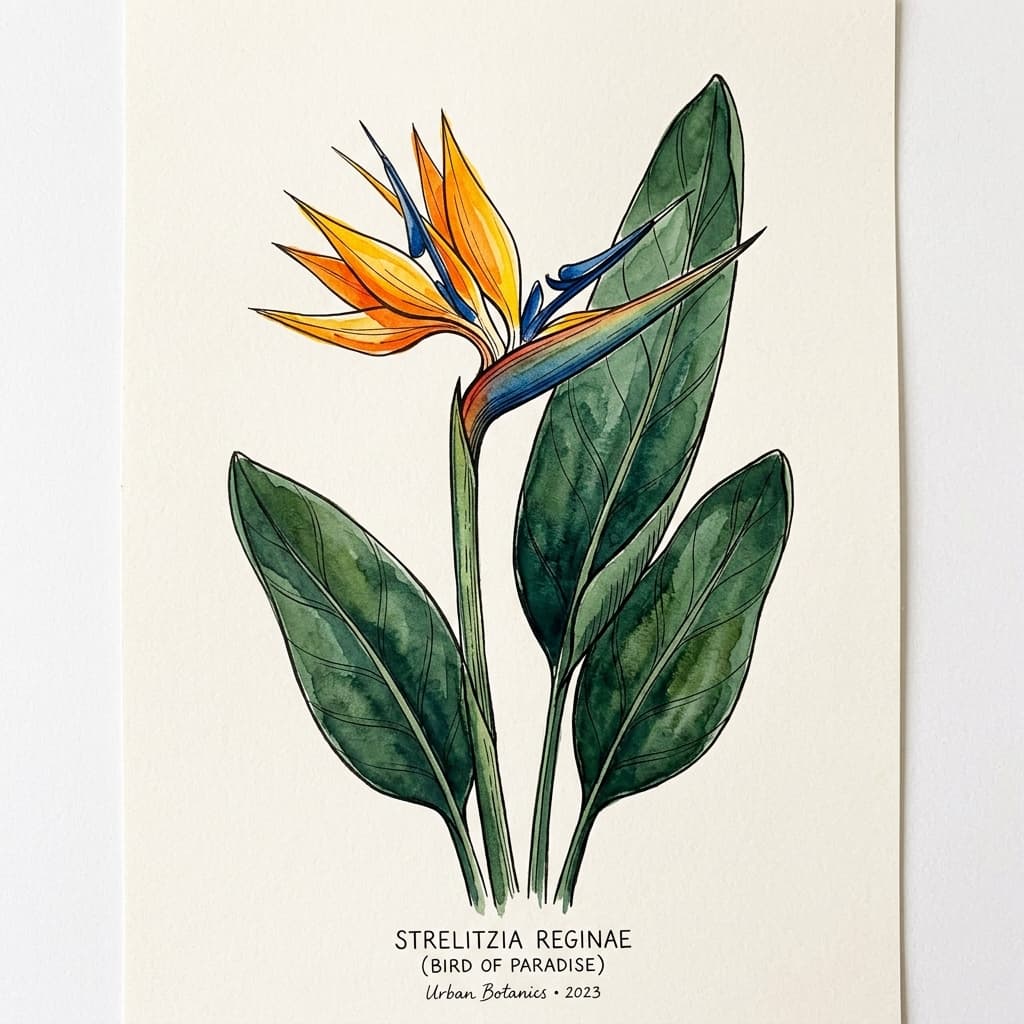
Urban Botanics Art
Botanical Blueprint
Localized Australian Care Taxonomy
Beginner Friendly. A highly resilient plant that is tolerant of wind, salty coastal air, and short dry spells. Hard to kill once established.
Full sun to bright, direct light. Outdoors, it loves the harsh Australian sun. Indoors, it must be placed directly in front of an North or West-facing window to receive at least 4-6 hours of direct sun.
Low-to-moderate. Water regularly during the hot summer months, allowing the soil to dry out slightly between waterings. Drought-tolerant in winter; water very sparingly.
Rich, loamy, well-draining garden soil or premium potting mix. Enjoys organic matter, so mix in compost or cow manure if planting in the garden.
Thrives in warm, temperate, and tropical climates. It tolerates light frost but needs protection in very cold alpine or inland regions of NSW and Victoria.
Division of mature clumps. Best performed in spring when repotting or re-landscaping.
Architectural, tropical, and upright. Paddle-shaped leaves form a fan-like cluster resembling a banana plant, topped by unique bird-like blooms.
Outdoors in a sunny garden bed, poolside landscape, or as a container plant on a sunny deck. Indoors, in a bright, sun-drenched sunroom or conservatory.
Versatile Sheltered
Caution:Mildly toxic if ingested. Can cause mild nausea and vomiting if leaves or seeds are chewed.
Local Availability
Compare prices from leading Australian nurseries
Bunnings Warehouse
Flower Power
Plants in a Box
Feature* Aussie Botanica is supported by our readers. When you click our links to nurseries, we may earn a small referral commission at no additional cost to you. Stock levels are estimated and subject to local store variations.