Aussie Botanica Logo
Aussie BotanicaEncyclopedia & Care
Versatile ZoneBotanical Family: Araceae

Red Back Ginger

Alpinia caerulea

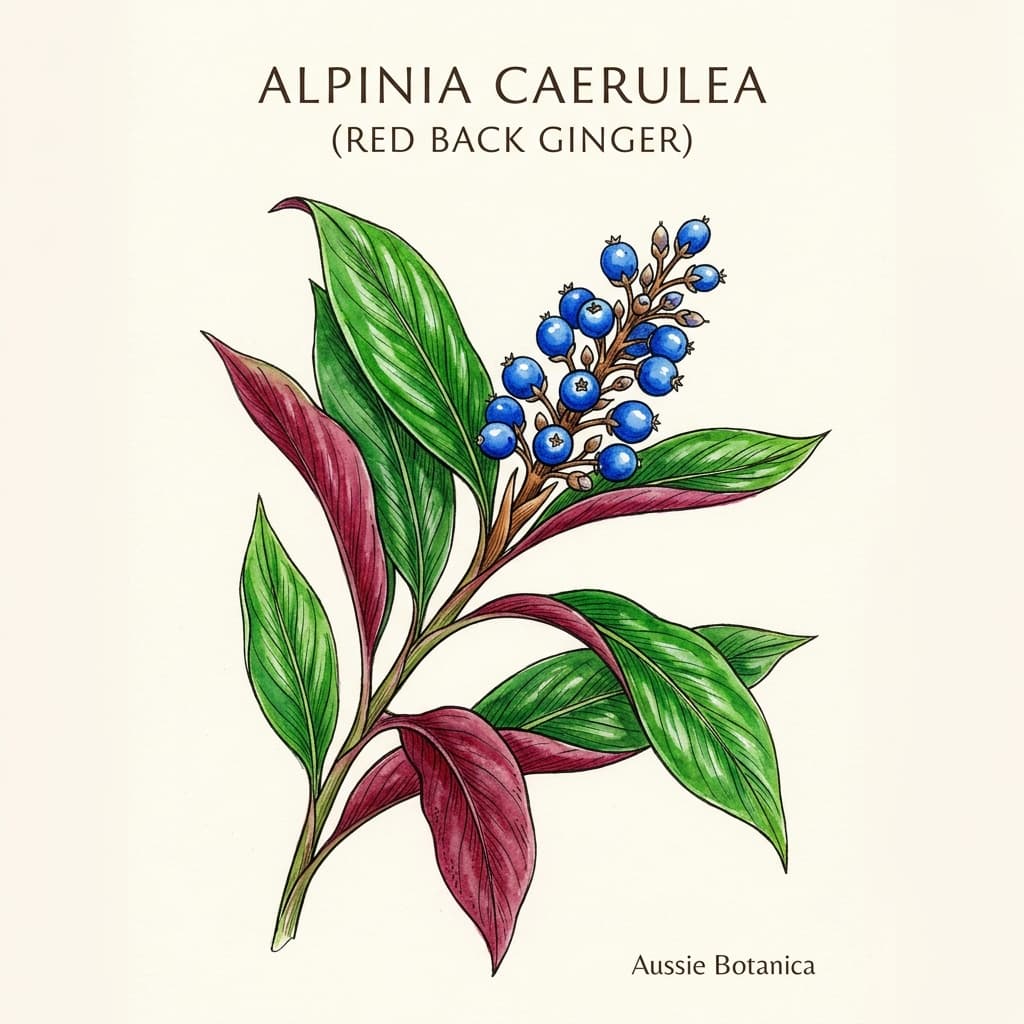
Alpinia caerulea, the red-back ginger, is an understory herb native to the rainforests of eastern Australia. It features large glossy green leaves with a distinctive reddish-purple underside. It produces white flowers followed by bright blue, globular berries that contain an edible tangy, ginger-scented pulp.

Native Origin & Climate

Warm-temperate and tropical rainforest understories of Queensland and New South Wales.

Expert Pruning Tip

Cut old, fruited stems down to ground level to tidy up the plant and encourage fresh new shoots from the rhizome.
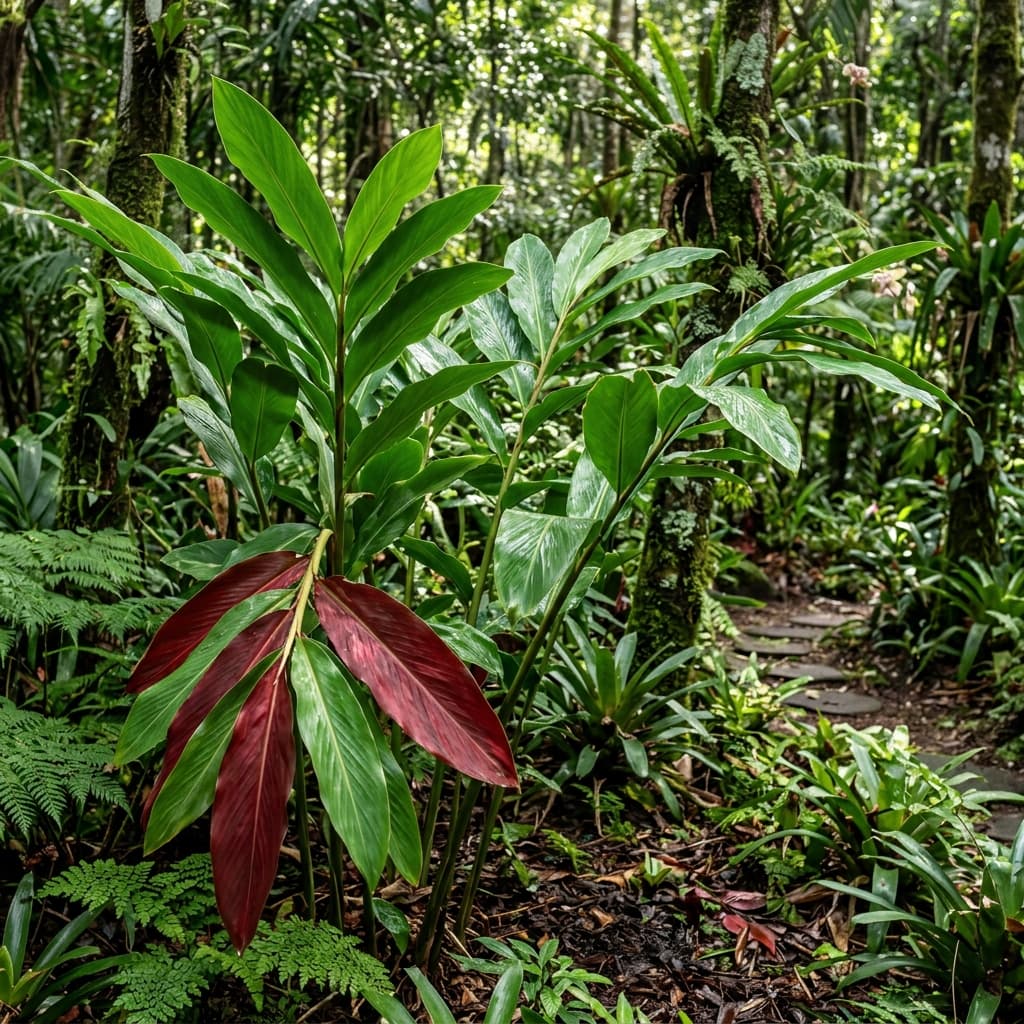
Red Back Ginger in a realistic interior/exterior setting
01. Environmental

Domestic Setting

Red Back Ginger stylized watercolor botanical illustration
02. Illustrated

Botanical Art Series

Hover images to bring forward

Botanical Blueprint

Localized Australian Care Taxonomy

Care Profile

Low to moderate. Easy to grow in shady, moist spots in the garden or inside.

Sunlight Diet

Part shade to deep shade. Inside, place in a medium to bright filtered light spot.

Thirst Level

Moderate. Enjoys regular watering, but can tolerate short dry spells once established.

Rooting Terrain

Rich, moist organic soil with good drainage. Mulch heavily in outdoor gardens.

Atmosphere

Prefers humid environments. Moderately frost-sensitive; protect from harsh frosts.

Propagation

Easily propagated by dividing the underground rhizome clumps.

Form & Vibe

Lush, tropical, and native. Tall arching stems with glossy leaves that show flashes of deep red on the reverse.

Perfect Placement

Under a shaded tree canopy in a garden bed, or a large pot on a sheltered deck.

Habitat Zone

Versatile

Toxicity Watch
Pets: Safe
Kids: Safe

Safe:Non-toxic to pets and humans. The berries contain an edible pulp historically eaten by Indigenous Australians.

Local Availability

Compare prices from leading Australian nurseries

AU Partner Links
BW

Bunnings Warehouse

Estimated:$24.95In Stock
NR

Natives R Us

Estimated:$18.00Check Site

* Aussie Botanica is supported by our readers. When you click our links to nurseries, we may earn a small referral commission at no additional cost to you. Stock levels are estimated and subject to local store variations.
Advertisement

Related Care Blueprints

Discover more profiles suitable for your Versatile zone

Bird of Paradise - Domestic Setting
Flowering & FoliageVersatileEasy Care
Domestic Setting
Strelitzia reginae

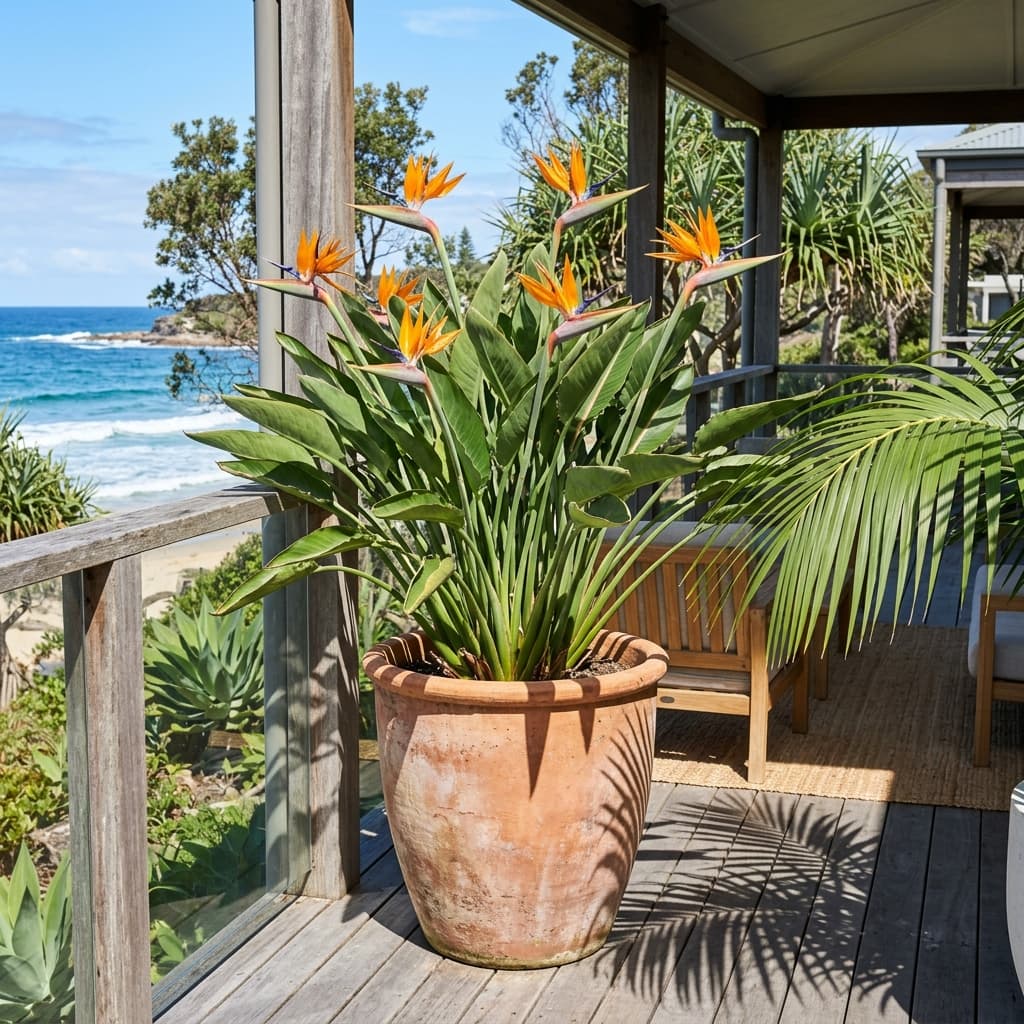
Bird of Paradise

Known for its exotic, crane-like orange and midnight-blue flowers, the Bird of Paradise is a striking tropical plant native to South Africa. It is extremely hardy and thrives in coastal and temperate Australian gardens. It can also be grown indoors in highly sunlit positions, bringing a bold architectural foliage texture to modern designs.

PropagationDivision Method
Explore Blueprint
Golden Cane Palm - Domestic Setting
PalmVersatileEasy Care
Domestic Setting
Dypsis lutescens

Golden Cane Palm

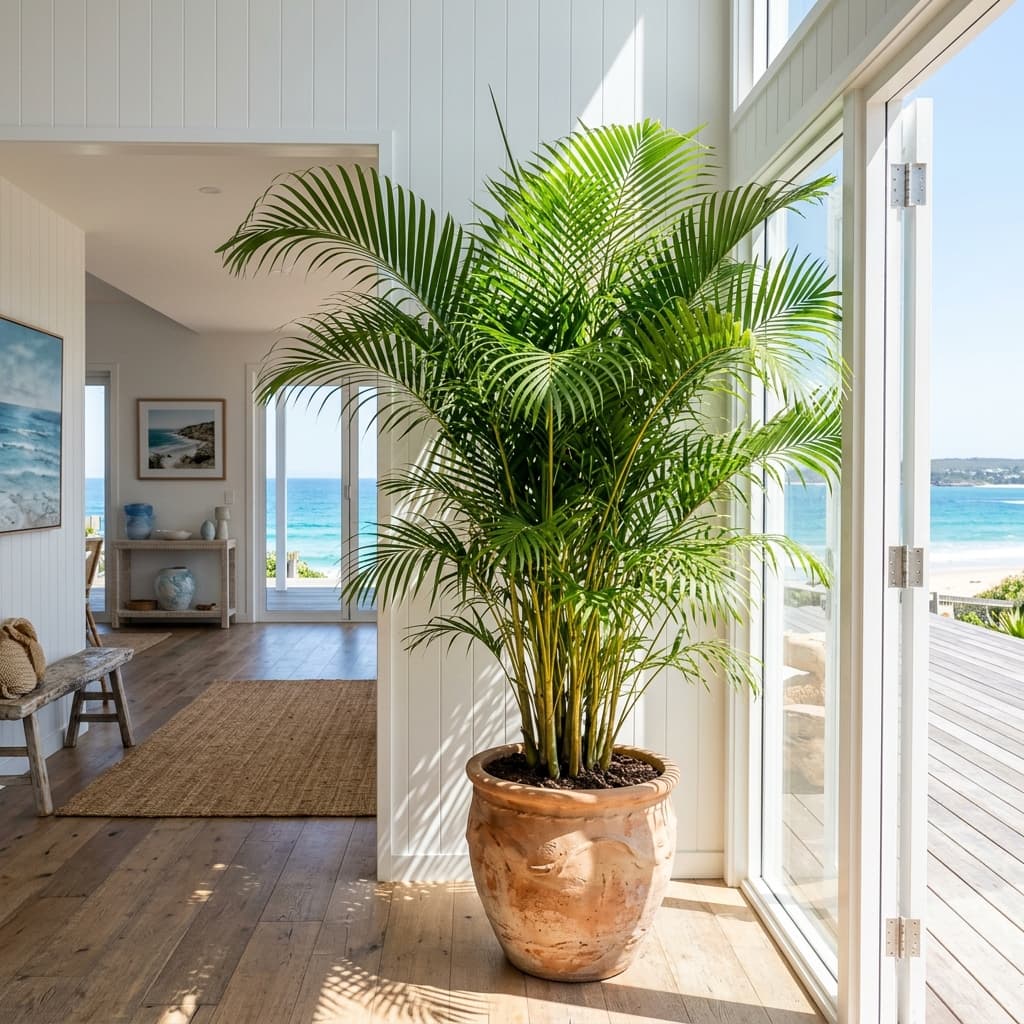
Dypsis Lutescens (Golden Cane Palm or Areca Palm) is a popular, fast-growing tropical palm native to Madagascar. Producing dense, golden-yellow ringed trunks and arching, feathery green fronds, it forms a thick clump that serves as a beautiful screen or structural statement in Australian gardens and sunlit interiors.

PropagationDivision Method
Explore Blueprint
Kangaroo Paw - Domestic Setting
Australian NativeOutdoorEasy Care
Domestic Setting
Anigozanthos flavidus

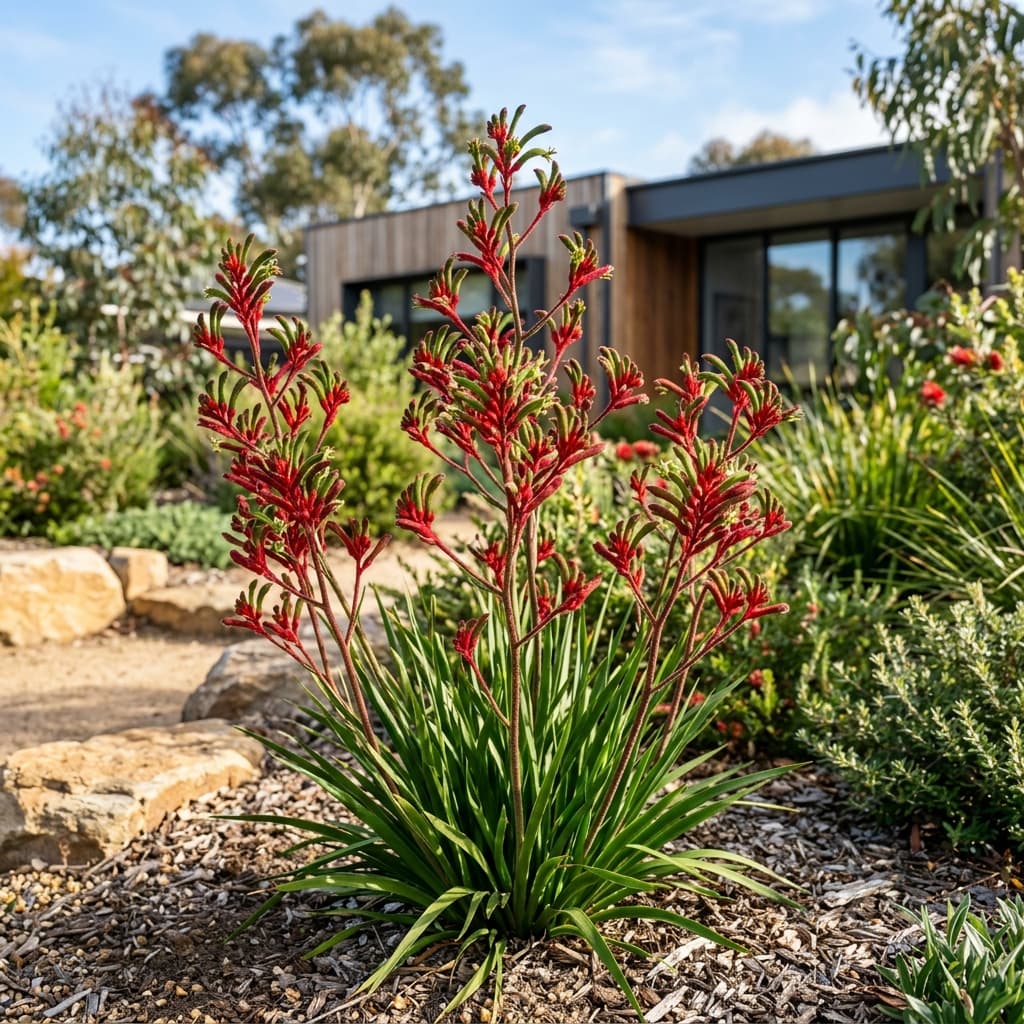
Kangaroo Paw

Anigozanthos Flavidus (Tall Kangaroo Paw) is a iconic Australian native plant famous for its clusters of velvety, tubular flowers shaped like a kangaroo paw. Native to Western Australia, it forms large clumps of strappy, sword-like green foliage, topped by tall branching stems of red, green, or yellow fuzzy flowers that attract native birds.

PropagationDivision Method
Explore Blueprint