Aussie Botanica Logo
Aussie BotanicaEncyclopedia & Care
Outdoor ZoneBotanical Family: Araceae

Burrawang

Macrozamia communis

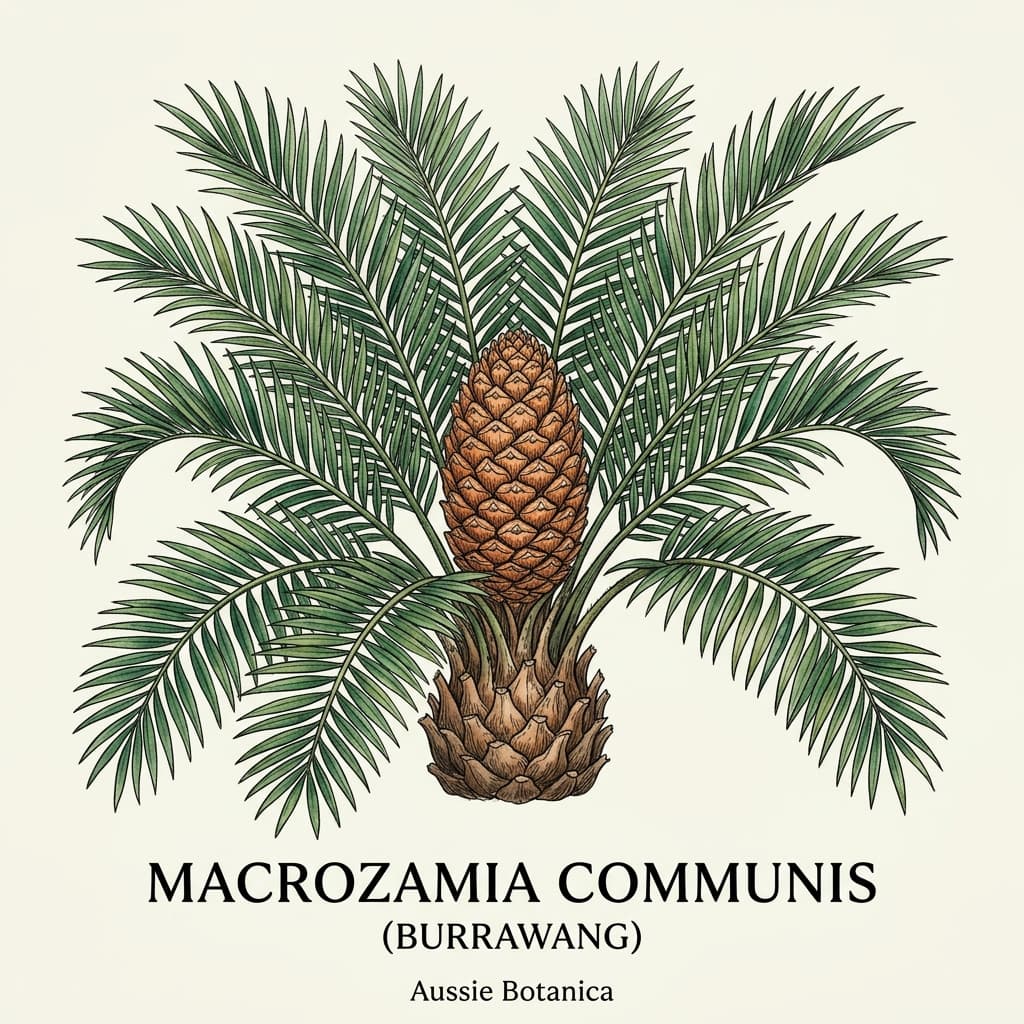
Macrozamia communis, commonly known as the Burrawang, is a prehistoric cycad native to the east coast of Australia. It features a woody underground trunk, and a crown of long, gracefully arching, dark green, palm-like fronds. Mature plants produce large cones, with the female plants producing striking reddish-orange seeds.

Native Origin & Climate

Sclerophyll forests of coastal and mountain regions of New South Wales, Australia.

Expert Pruning Tip

Only remove lower fronds once they turn completely yellow or brown to maintain a tidy crown.
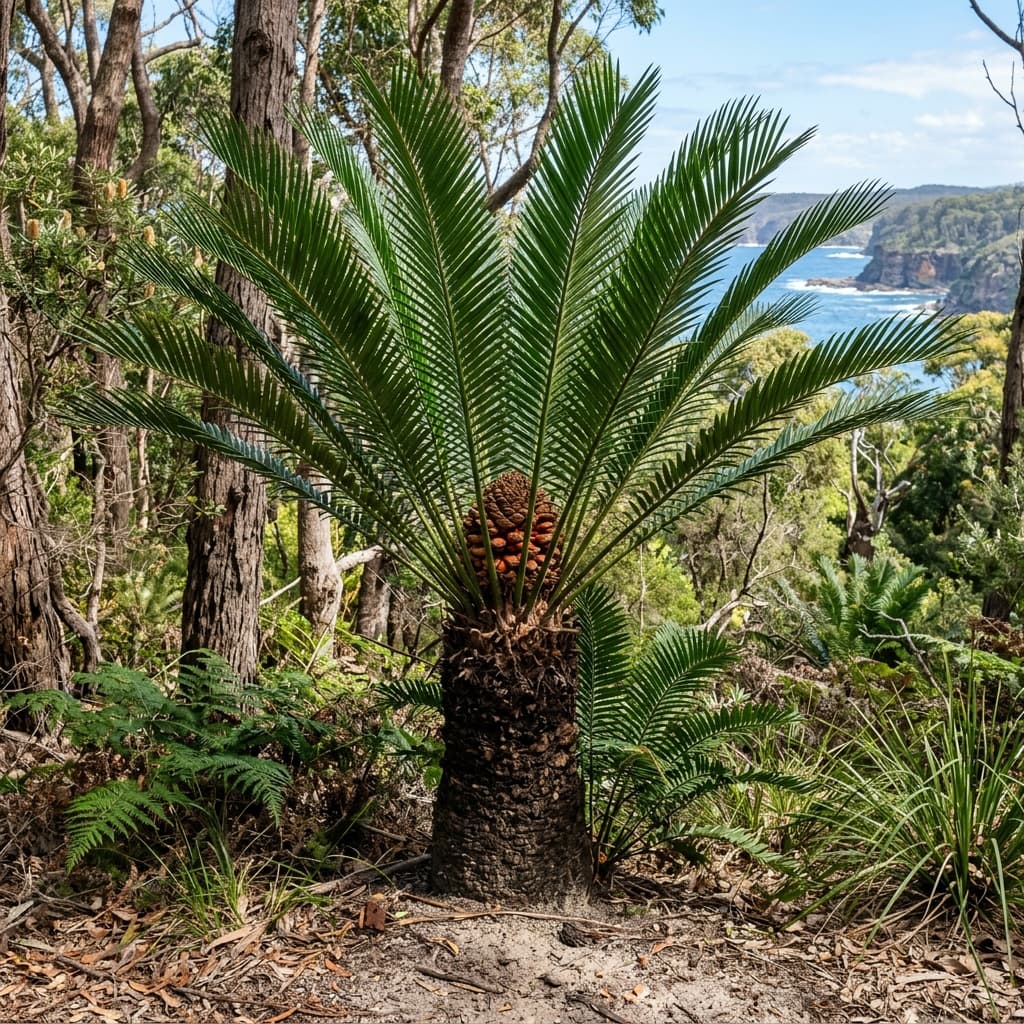
Burrawang in a realistic interior/exterior setting
01. Environmental

Domestic Setting

Burrawang stylized watercolor botanical illustration
02. Illustrated

Botanical Art Series

Hover images to bring forward

Botanical Blueprint

Localized Australian Care Taxonomy

Care Profile

Low maintenance. Extremely hardy, drought-tolerant, and slow-growing.

Sunlight Diet

Part shade to full sun. Highly adaptable to different light levels.

Thirst Level

Low. Water regularly until established, then highly drought-tolerant. Protect from soggy soil.

Rooting Terrain

Extremely well-drained sandstone or gravelly loam. Avoid waterlogged positions.

Atmosphere

Temperate to warm climates. Tolerant of light frosts and coastal breezes.

Propagation

Propagated from seed, which can take several months to germinate.

Form & Vibe

Prehistoric, architectural, and grand. Long dark green fern-like fronds forming a neat rosette.

Perfect Placement

As a structural feature plant in dry native gardens or a large feature pot on the patio.

Habitat Zone

Outdoor

Toxicity Watch
Pets: Toxic
Kids: Toxic

Toxic:All parts, especially the seeds, contain the toxin macrozamin. Highly toxic to dogs, livestock, and children.

Local Availability

Compare prices from leading Australian nurseries

AU Partner Links
BW

Bunnings Warehouse

Estimated:$45.00In Stock
SW

Sydney Wildflower Nursery

Estimated:$38.00Check Site

* Aussie Botanica is supported by our readers. When you click our links to nurseries, we may earn a small referral commission at no additional cost to you. Stock levels are estimated and subject to local store variations.
Advertisement

Related Care Blueprints

Discover more profiles suitable for your Outdoor zone

Pygmy Date Palm - Domestic Setting
PalmOutdoorEasy Care
Domestic Setting
Phoenix roebelenii

Pygmy Date Palm

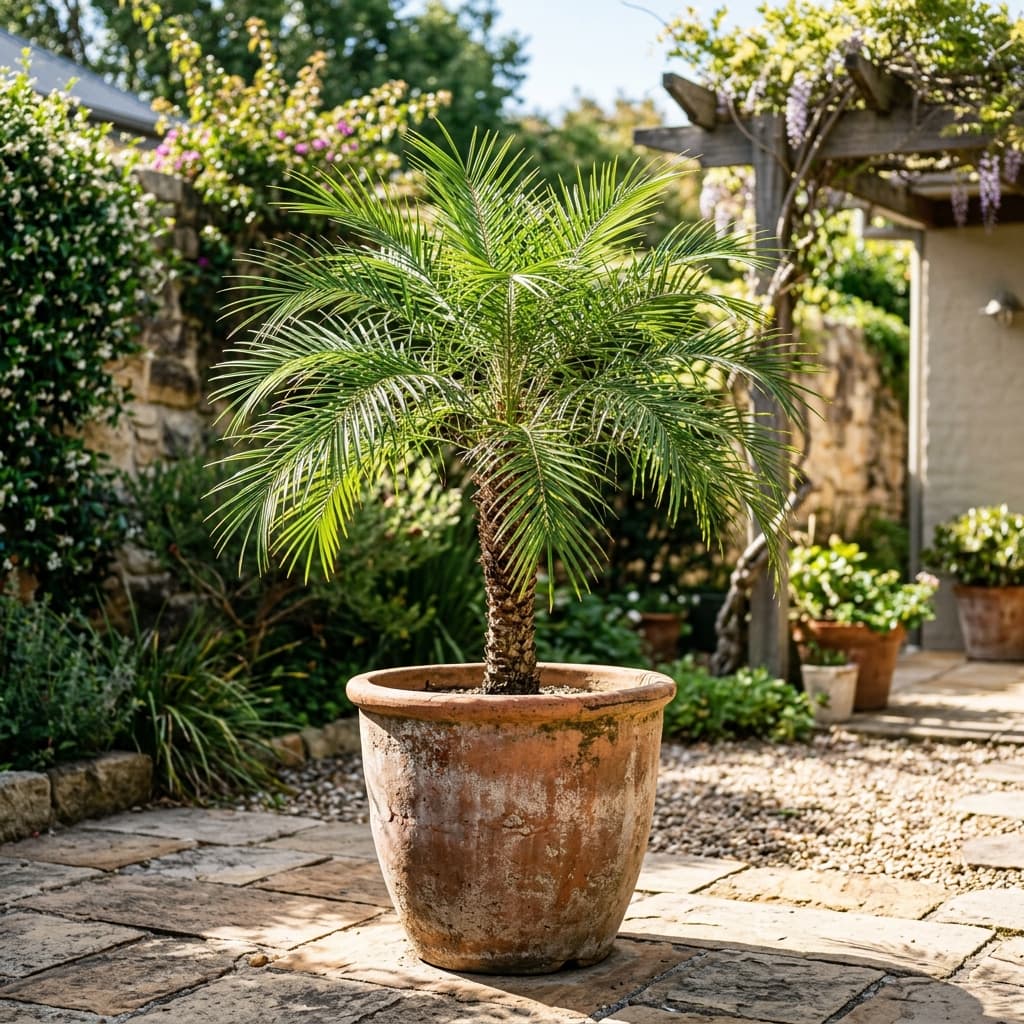
Phoenix Roebelenii, commonly known as the Pygmy Date Palm, is a popular slow-growing dwarf palm native to Southeast Asia. It features a slender, rough trunk topped with a dense crown of soft, feathery, arching fronds. Widely grown in Australian courtyards and large pots, it provides a timeless tropical feel.

PropagationSeeds. Method
Explore Blueprint
Foxtail Palm - Domestic Setting
PalmOutdoorEasy Care
Domestic Setting
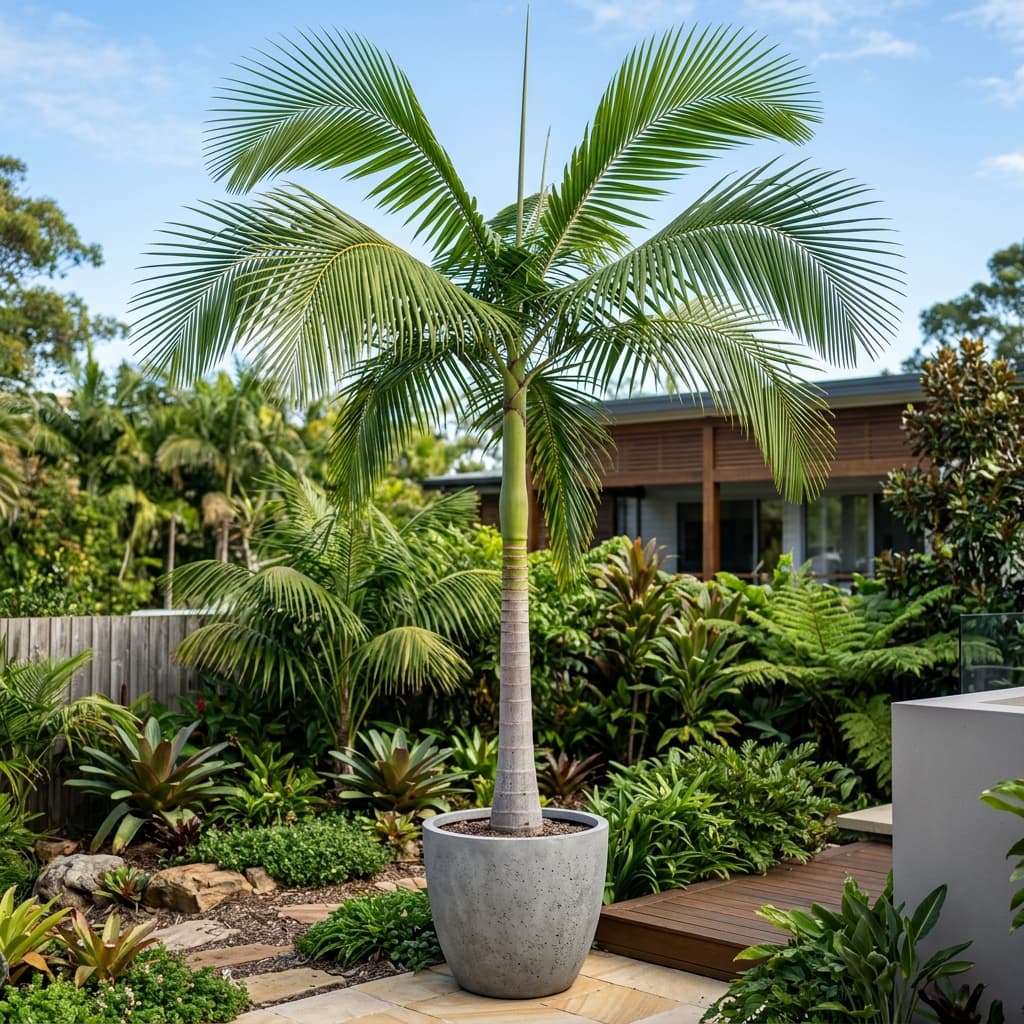
Wodyetia bifurcata

Foxtail Palm

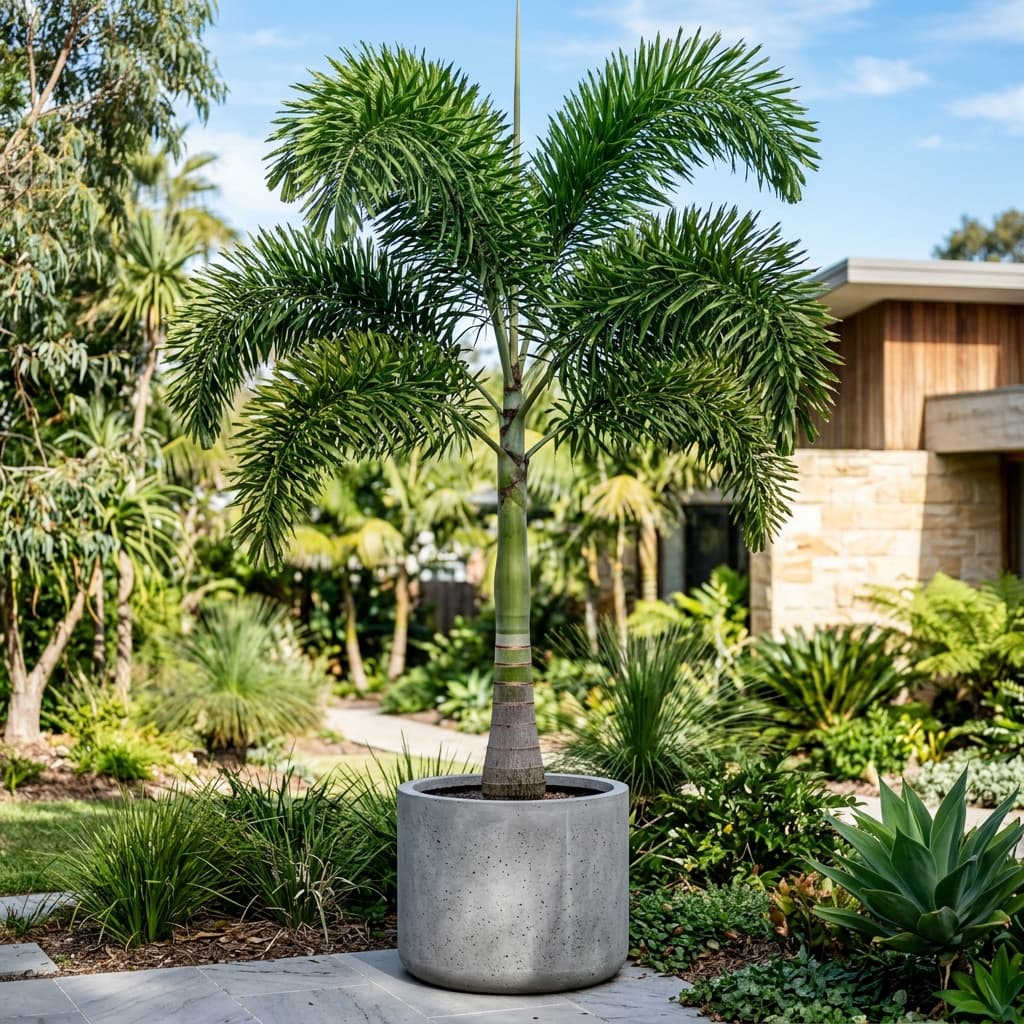
Wodyetia Bifurcata, commonly known as the Foxtail Palm, is a spectacular palm tree native to a small, remote area in Queensland, Australia. Discovered only in the late 20th century, it has become globally famous for its smooth, self-cleaning trunk and extremely bushy, plume-like fronds that resemble a fox's tail.

PropagationSeeds. Method
Explore Blueprint
Bangalow Palm - Domestic Setting
PalmOutdoorMedium Care
Domestic Setting
Archontophoenix cunninghamiana

Bangalow Palm

The Bangalow Palm is a fast-growing, elegant palm native to the eastern coast of Australia. Known for its smooth, ringed grey trunk, bright green crownshaft, and feather-like fronds, it brings a majestic, tropical look to gardens and streetscapes. In late spring or summer, it produces large sprays of violet flowers followed by bright red berries that attract native birds.

PropagationGrown Method
Explore Blueprint